
Small Munsterlander
Malý münsterlandský ohař





Key facts
| FCI group | 7. Pointing dogs |
|---|---|
| Country of origin | Germany |
Recognition features
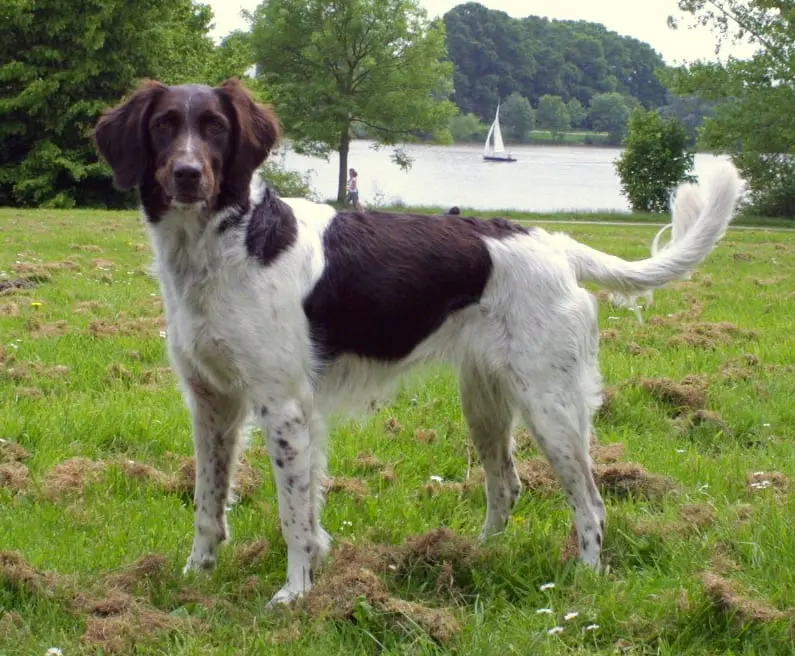
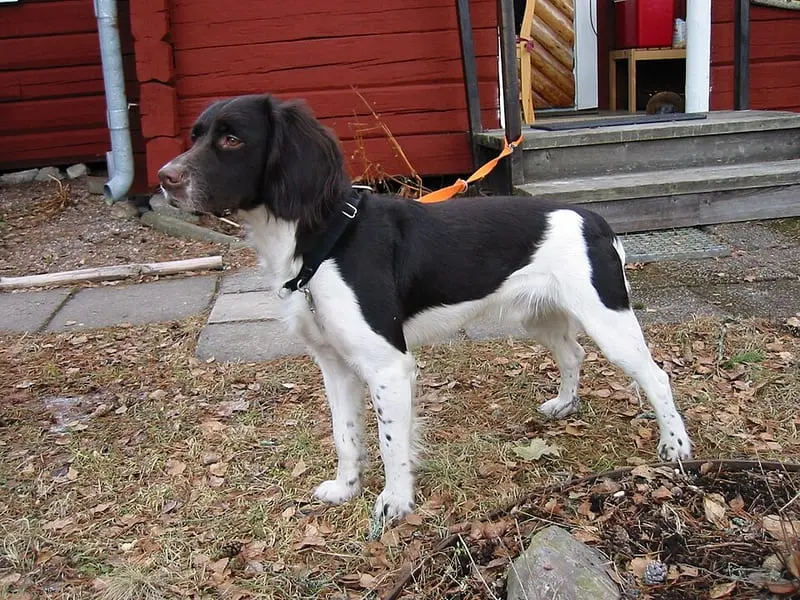
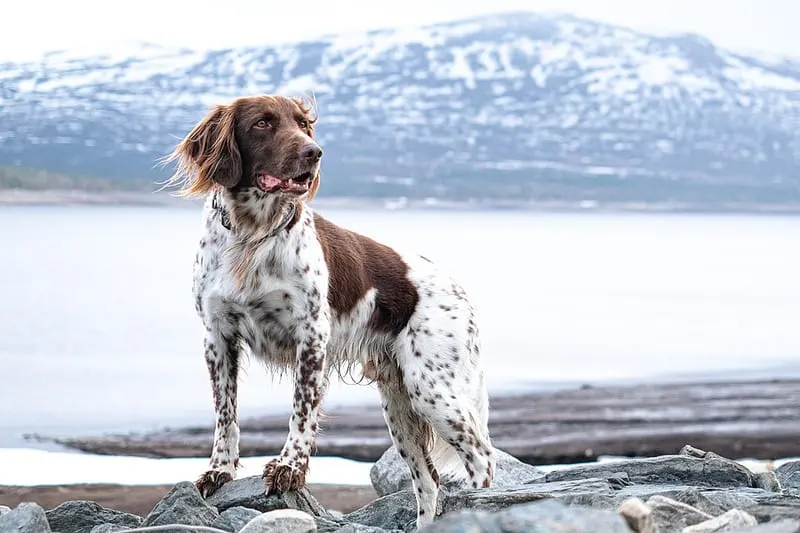
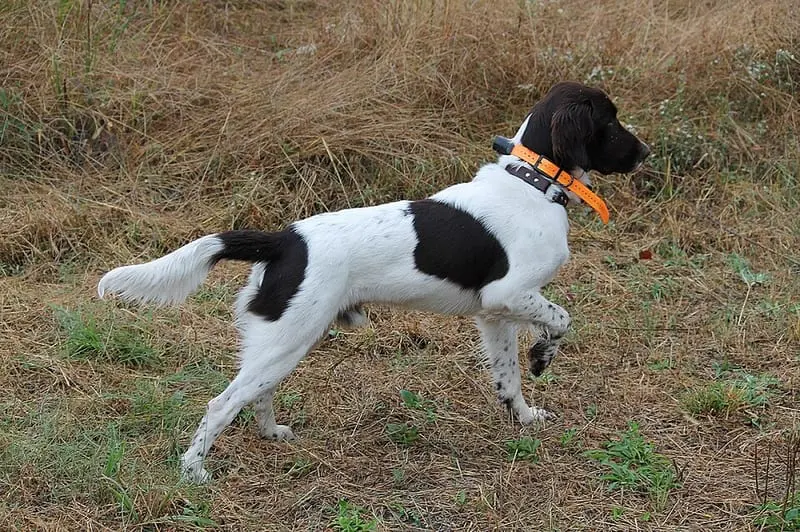
- Brown-and-white or brown roan coat with brown patches, mantle or ticking
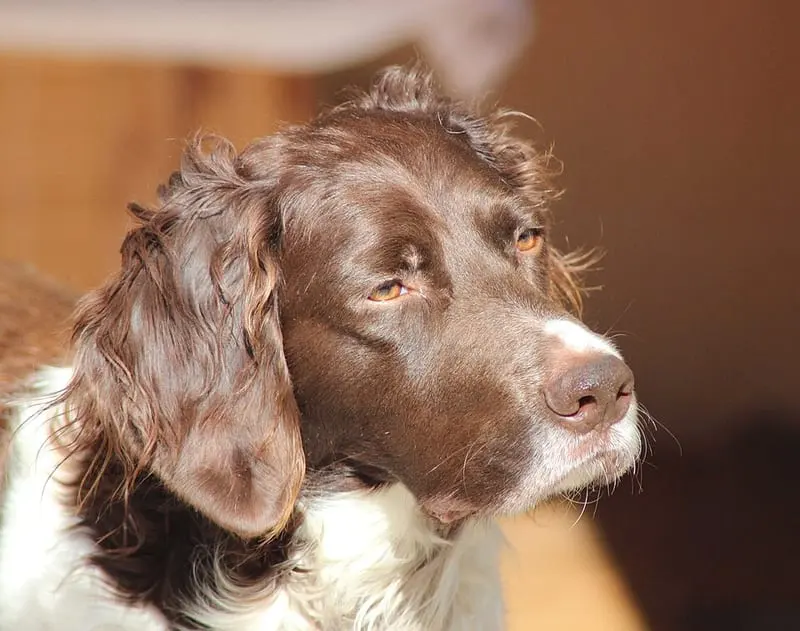
- Brown nose, brown lips and dark brown eyes
- Feathered forelegs, breeches on the hindlegs, tail with a distinct flag and white tip
Purpose
A versatile working gundog for field, forest and water, hunting in close cooperation with its handler and retrieving game.
History
Breeding in the north German Münsterland is documented from around 1870, drawing on the blood of old flushing and pointing dogs. A breed association was founded in Germany in 1912 to preserve it as an independent hunting breed, and the first standard was written in 1921 by Dr. Friedrich Jungklaus. Today it is valued by hunters worldwide for its versatility.
Coat
Dense, medium-length, close-lying and water-repellent coat, straight or only slightly wavy. Brown-white or brown roan with brown patches, mantle or ticking; a blaze is permitted, as are tan markings on the muzzle, above the eyes, and on ears, tail and legs.
Similar breeds
- Large Munsterlander · Compare
- German Spaniel · Compare
- Drentsche Partridge Dog · Compare
- Stabijhoun · Compare
Learn to recognise this breed and many more
In the Dogtice quiz you practise breeds on photos and see the differences between look-alike breeds.
The information is indicative. Texts are based on available sources and may contain inaccuracies; for binding details (e.g. for breeding or shows) use the official breed standard. Report a photo or rights.